
Why Does My Ear Feel Blocked Even When There Is No Wax?
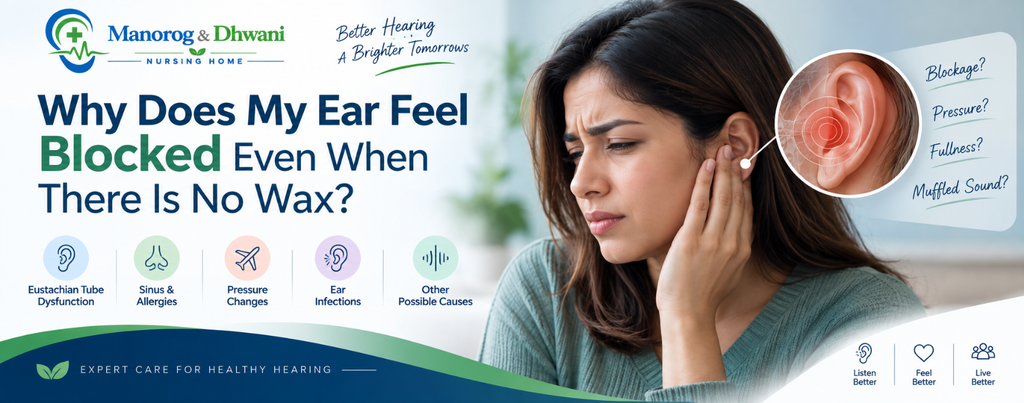
You touch your ear, try swallowing, maybe even clean around it—but the strange blocked feeling remains. Sounds may seem quieter, your own voice may sound different, or it may feel as if there is water trapped somewhere inside.
Then you check for earwax and find nothing.
So what is causing the problem?
A blocked-ear sensation does not always come from something sitting inside the ear canal. Pressure changes, nasal congestion, problems with the Eustachian tube, fluid behind the eardrum, infections and changes in hearing can all produce a similar feeling.
The important thing is to look at the other symptoms instead of assuming that every blocked ear needs cleaning.
What Does a Blocked Ear Without Wax Mean?
When people say their ear feels blocked, they may actually be describing several different sensations.
You might notice:
- Sounds seem dull or distant
- One ear feels different from the other
- There is pressure or fullness
- Your voice sounds unusually loud inside your head
- The ear clicks when you swallow
- There is occasional ringing
- You feel slightly unsteady
These symptoms can come from different parts of the ear. The outer ear canal may be completely clear while the problem is happening deeper inside.
1. A Problem With the Eustachian Tube
One of the most common explanations is Eustachian tube dysfunction.
The Eustachian tube runs between the middle ear and the upper throat. It helps the middle ear adjust to changes in air pressure and also helps fluid drain away.
If the tube is swollen or does not open properly, pressure can build up. This may give you the odd sensation that your ear is plugged, even though there is nothing blocking the ear canal.
People with this problem may also notice popping, clicking, muffled hearing, ear pressure or occasional balance symptoms. Colds, allergies and changes in altitude can contribute to Eustachian tube problems.
2. Your Nose May Be Affecting Your Ear
The ear and nose are not separate systems. They are connected through the Eustachian tube.
That is why a blocked nose after a cold or during an allergy flare-up can sometimes be followed by ear pressure.
You may notice that the ear feels worse when your nose is particularly congested. Once the underlying congestion improves, the ear sensation may also settle.
If blocked ears happen repeatedly along with nasal problems, an ENT evaluation can help determine whether the nose, sinuses or Eustachian tube is involved.
3. Fluid May Be Sitting Behind the Eardrum
Another possibility is fluid in the middle ear.
This is different from water entering the ear canal. The fluid is located behind the eardrum, so looking into the outer ear will not reveal it.
This can affect how sound travels and may make your hearing seem muffled. A person may describe it as hearing through a wall or having one ear that suddenly feels “heavy.”
An examination of the eardrum can help a doctor determine whether fluid is present.
4. An Ear Infection Could Be Responsible
Ear infections can cause several symptoms besides pain.
Depending on the part of the ear involved, you might experience pressure, reduced hearing, fever, discomfort or fluid coming from the ear.
If the blocked sensation is accompanied by earache, discharge or a noticeable change in hearing, it should be checked rather than treated as simple wax. WHO recommends seeking medical care for ear pain, discharge or difficulty hearing.
5. Flying or Travelling at High Altitude
Have you ever noticed your ears becoming blocked while an aeroplane is landing?
This happens because the air pressure around you changes quickly. Your middle ear needs to adjust to that change, and the Eustachian tube plays an important role in doing so.
If the pressure does not equalise comfortably, you may experience temporary fullness, discomfort or muffled hearing.
A similar issue can happen during scuba diving or travelling through areas with major altitude changes.
6. The Problem May Actually Be Hearing Loss
Sometimes people describe a change in hearing as a blocked-ear sensation.
For example, you may suddenly realise that conversations sound less clear in one ear. Because there is no obvious pain or visible blockage, it can be tempting to assume that something is stuck inside.
But hearing changes can have many causes. Exposure to loud sounds, infections, problems involving the eardrum or inner-ear conditions can affect hearing.
This is particularly important if the hearing change happens suddenly.
Can You Try Anything at Home?
If the problem started during a flight or mild congestion, swallowing, yawning or drinking water may sometimes help with pressure equalisation.
But there is one thing you should not do: keep putting objects into your ear.
Cotton buds, pins, keys and similar objects can irritate or injure the ear canal. They can also push wax deeper if wax is present. WHO advises against putting objects or unprescribed fluids into the ear.
Also avoid repeatedly forcing the ear to pop if it hurts.
When Should You Visit an ENT Specialist?
A blocked feeling that disappears quickly may not require extensive investigation. However, an ENT appointment is worth considering when the sensation:
- Continues for several days or keeps returning
- Is affecting your hearing
- Is mainly affecting one ear
- Comes with persistent ringing
- Occurs with dizziness or balance problems
- Is accompanied by pain
- Is associated with fluid or discharge
For people looking for an ENT consultation and evaluation in Katni, an examination can help identify whether the problem is related to the ear canal, eardrum, middle ear, Eustachian tube or another area.
What Happens During an ENT Examination?
The first step is usually understanding what you have been experiencing.
An ENT specialist may ask about recent colds, allergies, travel, noise exposure, pain, ringing, dizziness and changes in hearing.
The ear can then be examined to check the ear canal and eardrum. If your hearing appears reduced, an audiometry or hearing test may also be suggested.
The reason for testing is simple: the same “blocked” sensation can have completely different causes, and treatment depends on what is actually found.
Frequently Asked Questions
Why does my ear feel blocked if there is no wax?
The sensation can come from pressure or inflammation deeper in the ear. Eustachian tube dysfunction, congestion, middle-ear fluid, infection, pressure changes and hearing problems are some possible causes.
Can a blocked nose make one ear feel blocked?
Yes. Nasal swelling can interfere with the normal functioning of the Eustachian tube, which may change pressure in the middle ear.
Should I clean my ear if it feels blocked?
Not unless a healthcare professional has identified wax or another reason for cleaning. The ear has a natural cleaning process, and putting objects inside it can cause injury.
When is a blocked ear more concerning?
A sudden change in hearing deserves prompt medical attention. The same applies when hearing difficulty occurs with significant pain, discharge or worsening symptoms.
Can loud music make my ear feel blocked?
Yes. After exposure to loud sound, some people experience temporary muffled hearing or ringing. Repeated or prolonged exposure to excessive noise can cause lasting hearing damage.
Final Thoughts
An ear that feels blocked is not necessarily an ear that needs cleaning.
Sometimes the explanation is connected to pressure, congestion, the Eustachian tube, fluid behind the eardrum or a change in hearing. Looking at the complete set of symptoms is more useful than focusing only on earwax.
If the sensation keeps returning, does not settle, or comes with hearing changes, pain, discharge or dizziness, getting the ear examined is a sensible next step.
For additional information about protecting your ears and avoiding common ear-care mistakes, see the World Health Organization’s ear-care recommendations